 |
 |
 |
 |
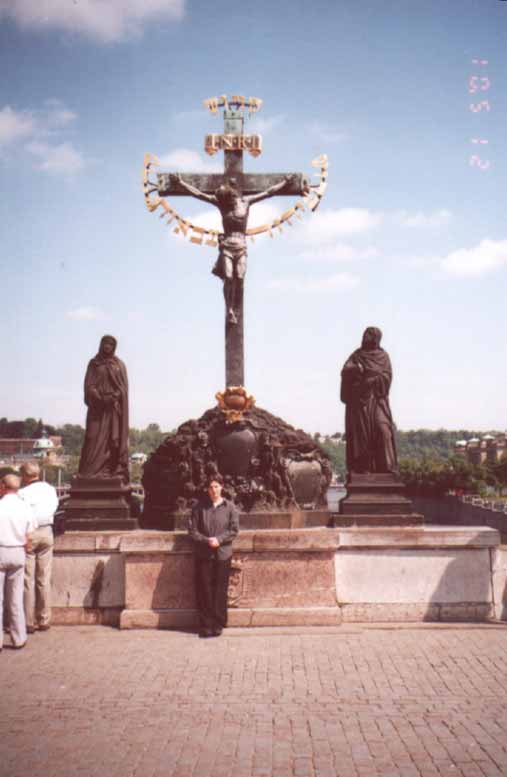
| There isn't too much that's unusual about a crucifix on a bridge in an old European city, especially one as old as the Charles bridge, but look carefully at the words around the body. Yes - we were also surprised to realize that it says "Kadosh, kadosh, kadosh" - one of the holiest utterances from the daily kedusha in the Amidah prayer. The words were placed on the crucifix in 1696 to punish Elias Backhoffen, a Jew who refused
to remove his hat when passing the statue. The Jewish community was forced to pay for the gold letters as a punishment for their blasphemy. |
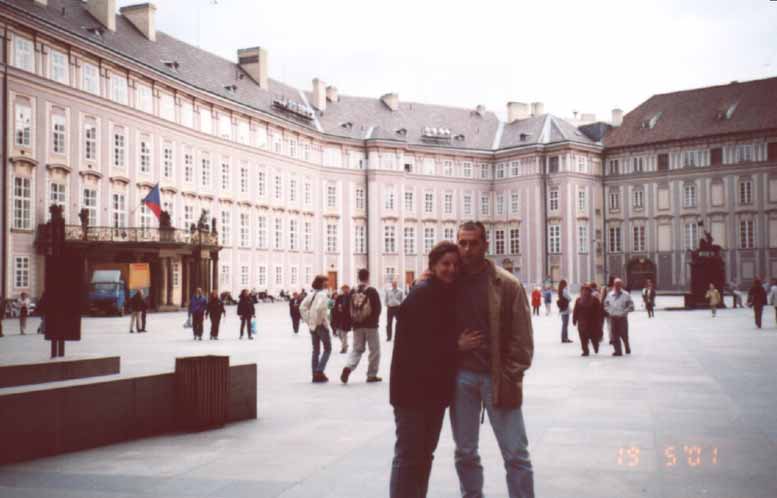
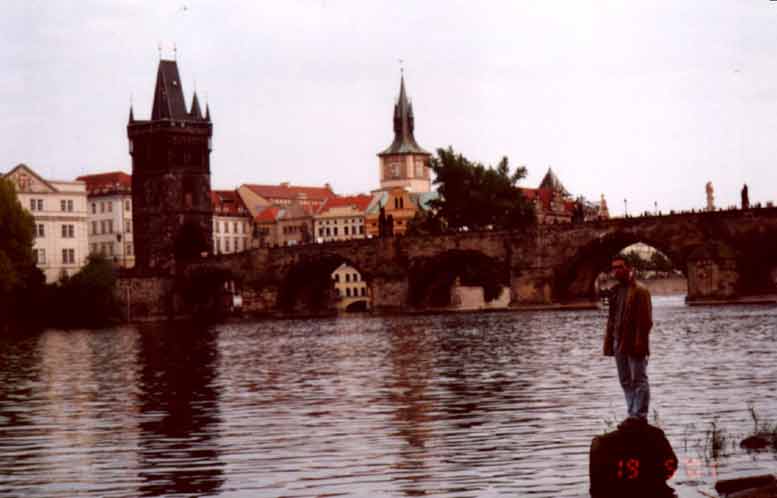
Here are Tanya and Branko outside the St. Vitus Cathedral (which you can't actually see because it's opposite the building that you're looking at...) This cathedral was commissioned by King Charles IV in 1344 (yes, the same one responsible for the bridge) and is the largest in the Czech Republic. | The Charles Bridge is such a monument in Prague that Branko had to be photographed next to it too. Here he is balancing next to the Vltava. |
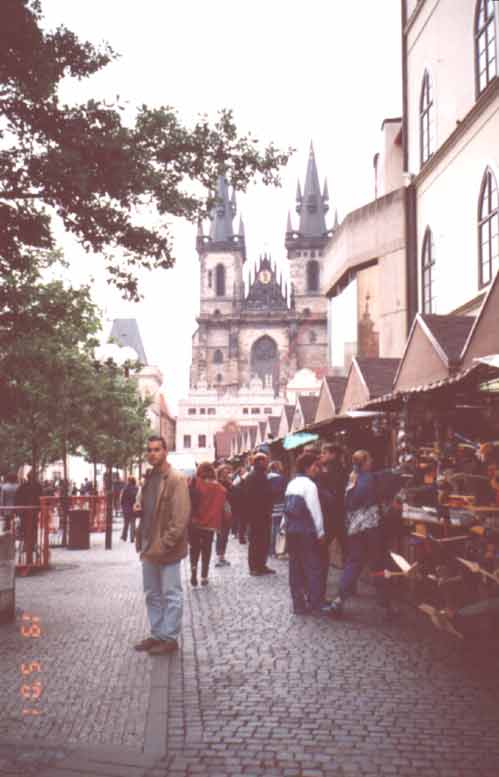
Tanya insisted on taking this picture of Branko standing in the market in the old town square. The old town square forms the heart of the city of Prague. Behind him, you can see the towers of the gothic Tyn Cathedral, which was completed in 1511. |
 |
 |
 |
 |
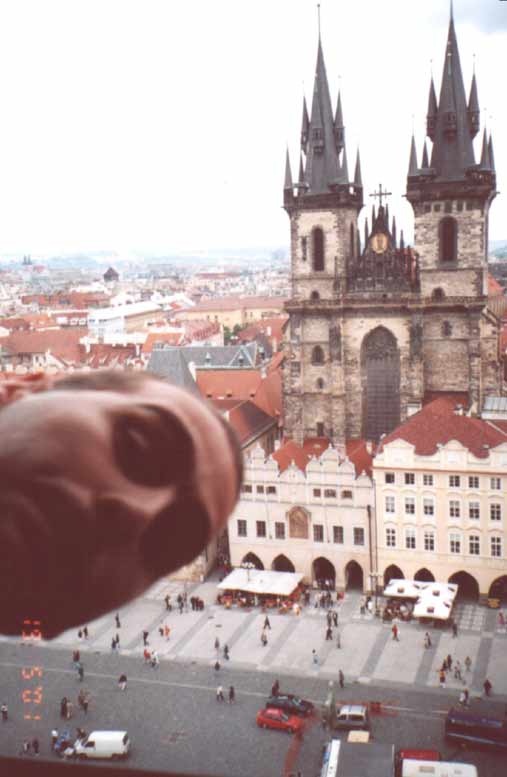
| Here is Branko with yet another view of the old town square, but this time from above. This one was taken from the top of the astronomical clock tower (The Orloj) which is truly a tourist magnet in Prague. Every hour, a trap door opens in the side of the clock tower and Jesus marches out with his disciples. It also tells the time and keeps up with the months and seasons, and has worked on the original clockwork for six centuries. The clock was a technological achievement for the age and legend has it that its maker was deliberately blinded to prevent him from making a similar clock anywhere else in Europe. Very nice... Check out the website at http://www.orloj.com/ |
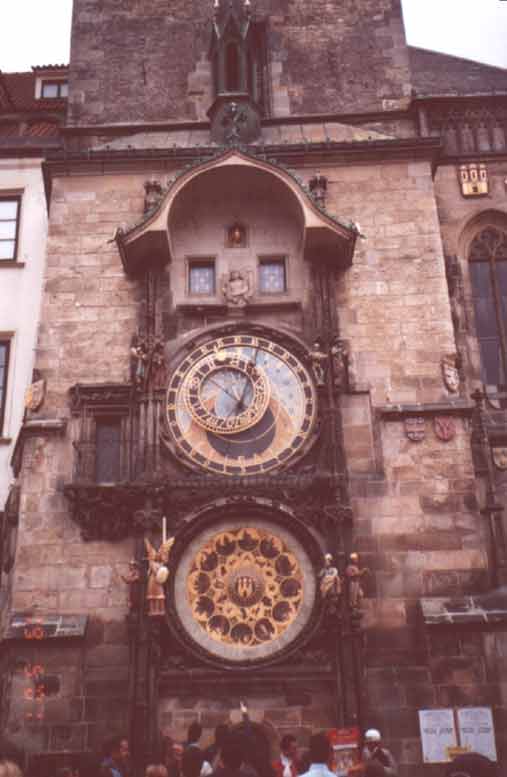
And here is a close up of The Orloj. You can see the trap doors for Jesus and his entourage immediately above the astronomical clock. You can't see Jesus though, because if it was on the hour (which is when he pops out to say, "Hi!") we wouldn't have been able to push our way past the crowds outside the tower. |
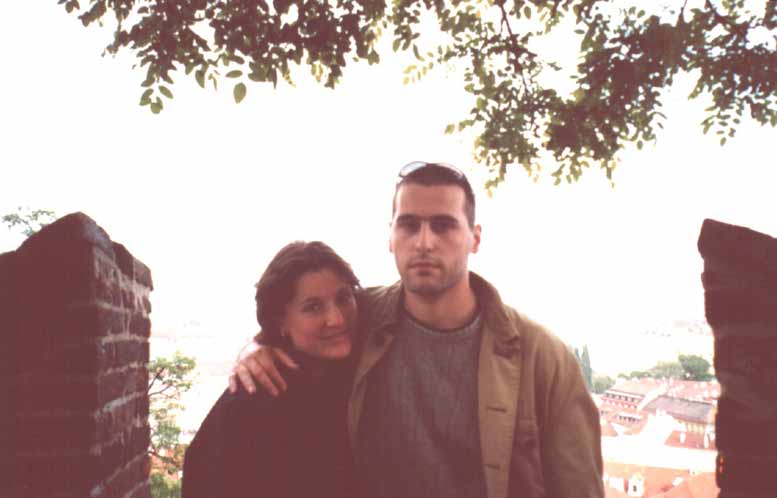
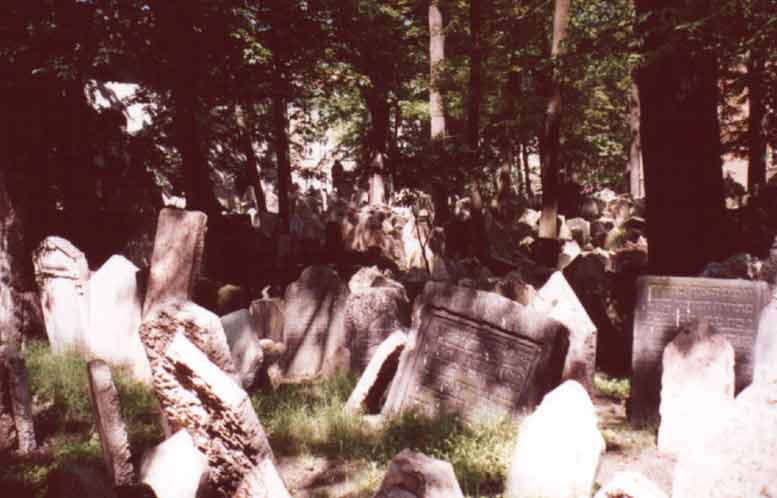
This is just one of those cutsie couple pictures that you have to take when you're touring a city and find a spot with a great view. | Prague's old Jewish cemetery served the Jews who lived in a ghetto with a limited area of land available for burial. There are 12,000 gravestones in this tiny cemetery, with graves built one upon the other. The oldest dates from 1389 and the most recent is from 1787. Rabbi Lowe is buried in this cemetery. |
 |
 |
 |
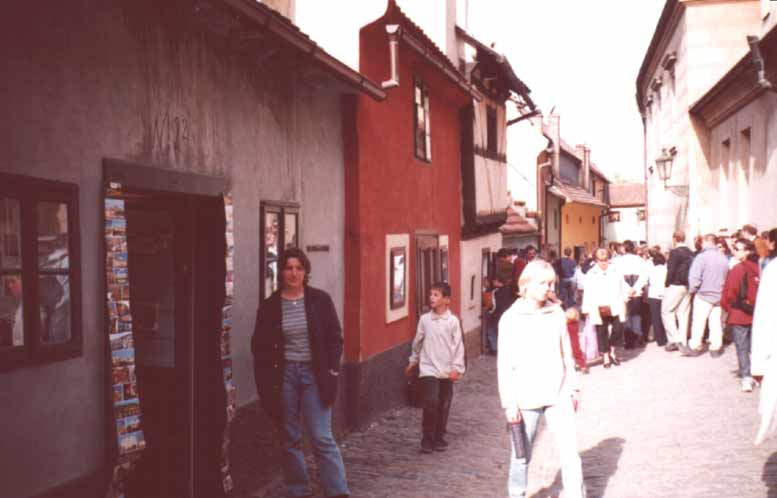 |
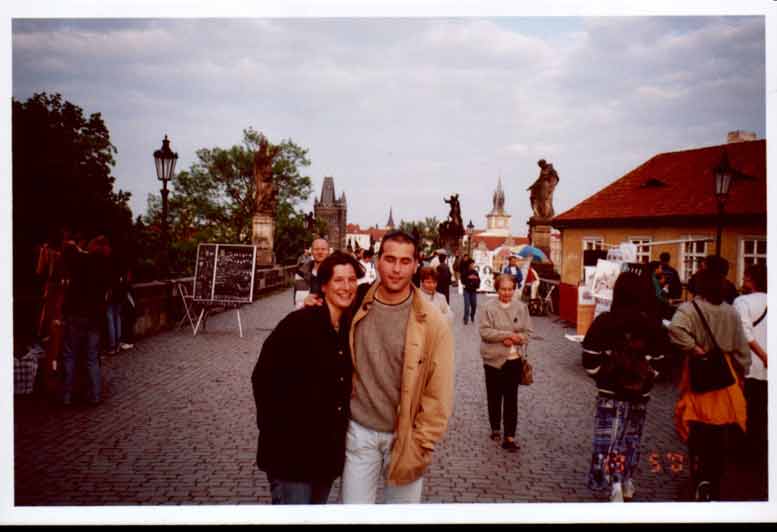
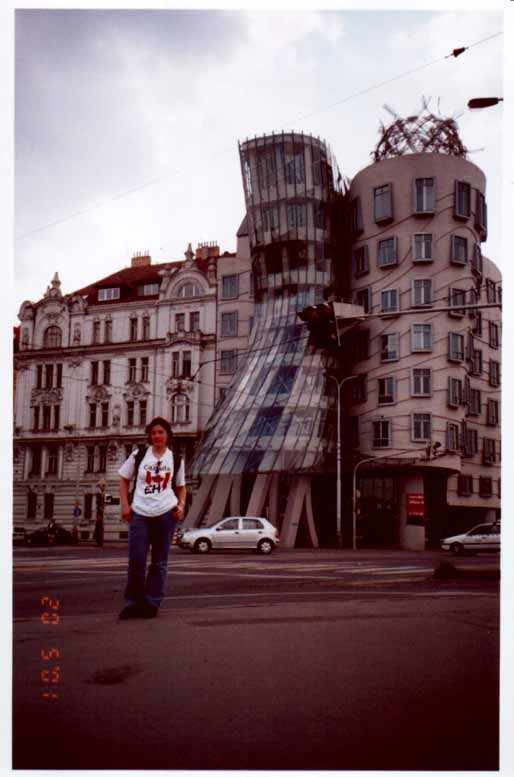
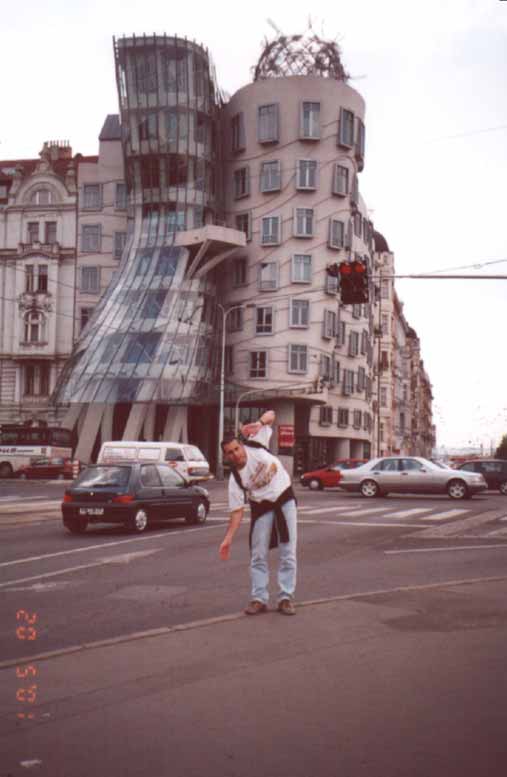
| Tanya forced Branko to stand for this picture at sunset while walking over the Charles bridge... Just as well that he's in the middle of saying something otherwise the picture would probably show him pulling his "why-do-we-have-to-stand-here-and-take-pictures-like-tourists" face | One would think that these two 1995 modern structures would stick out of Prague's classical, 'correct' European architecture like a sore thumb, but 'Fred and Ginger', as they are fondly called by the locals, blend into the environment surprisingly well. | The strange building (yes, it's only one) in the background is the 1996 creation of architects Frank Gehry and Vladimir Milunic (who's Croatian.) The building is set beside the Vltava river, between lots of very old buildings and blends into the environment so naturally that it's hard to believe that it's one of the few contemporary structures in Prague. The elements of the 8-story building seem to be caught in a tango, hence it's affectionately referred to as "Fred and Ginger." | The homes of the alchemists who used to live in the compound of Prague Castle have been converted into a colourful lane of gift shops and tourist attractions galore. But before the commercial value of dinky houses was discovered, these buildings housed the city's poor. Tanya is standing at the entrance of the tiny home where Franz Kafka once lived. |
 |
 |
 |
 |
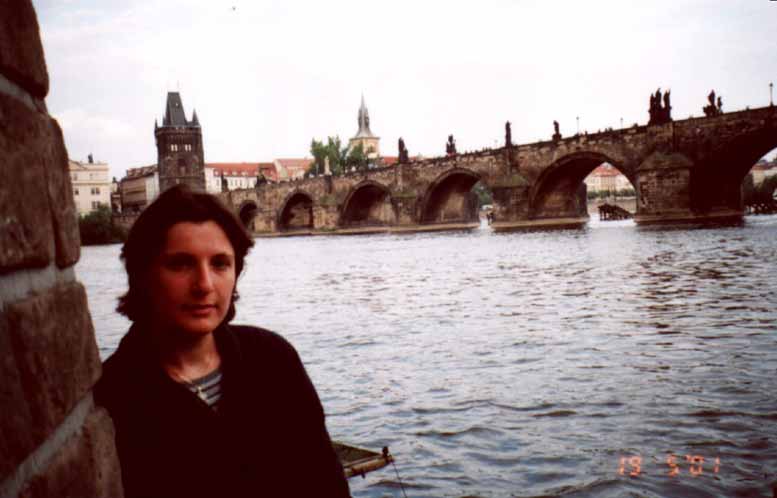
| The Vltava river is the longest Czech river and runs through Prague for approximately 31 km. Tanya is pictured on the bank of the river with the Charles Bridge in the background. The bridge is the oldest in Prague and was built in 1357 by Charles IV. |
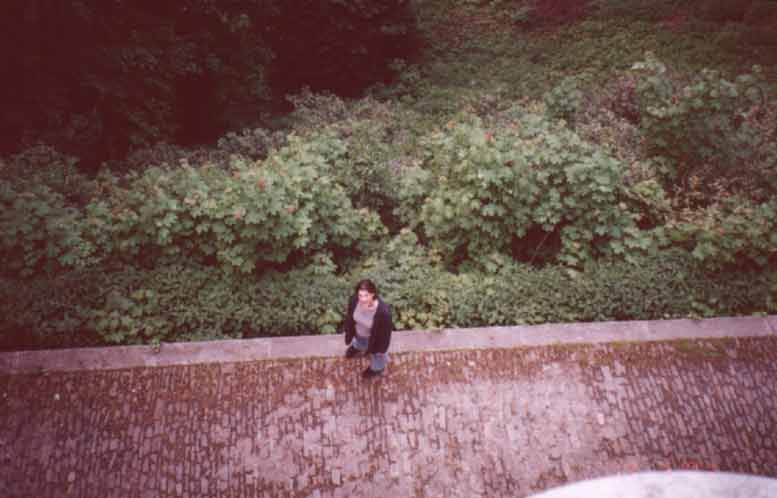
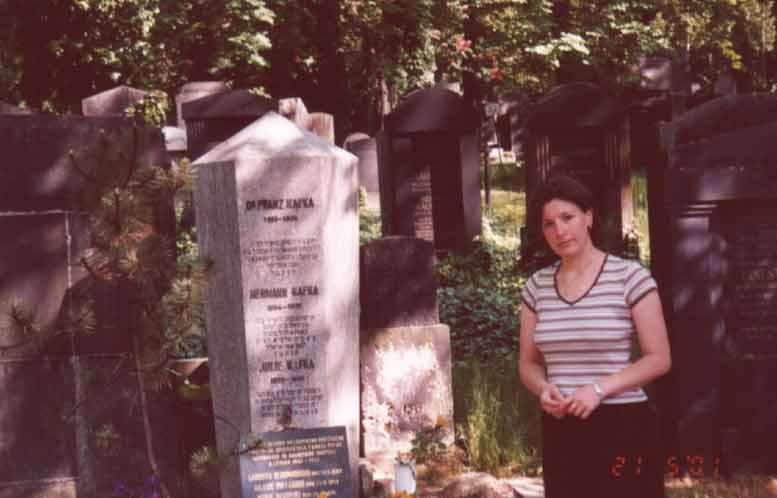
Branko took this picture of Tanya in the garden of Prague Castle from a wall that he was probably not allowed to be climbing. The first structure of Prague castle was built in 880 CE and since then was expanded by kings and emperors to become the hugely impressive castle that it is today. | One of the few advantages of staying at the dumpy youth hostel quite far out of the center of Prague was the proximity to the new Jewish cemetery where Franz Kafka is buried. Here, Tanya is pictured at his grave. |
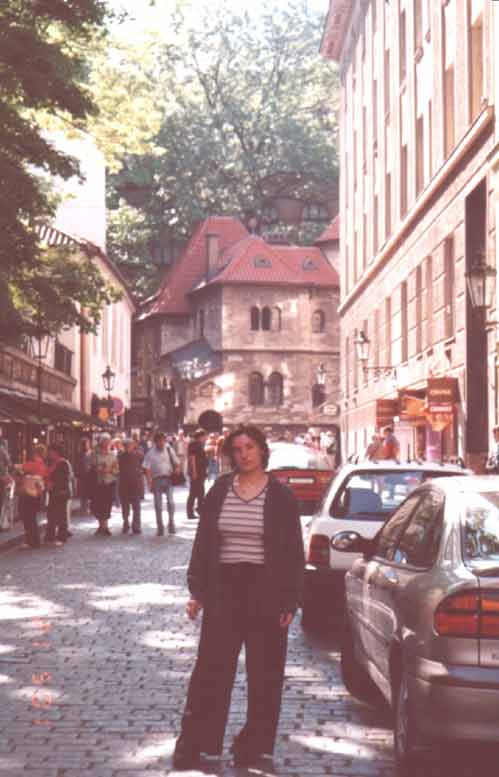
This is Tanya in the Jewish area of Prague. The building at the end of the road is the Klaus Synagogue that forms part of the Jewish Museum housing many artifacts and objects from Prague's rich Jewish history. This building is the exit from the old Jewish cemetery and the building on the left (that you can hardly see) is the Maisel Synagogue. |
 |
 |
||
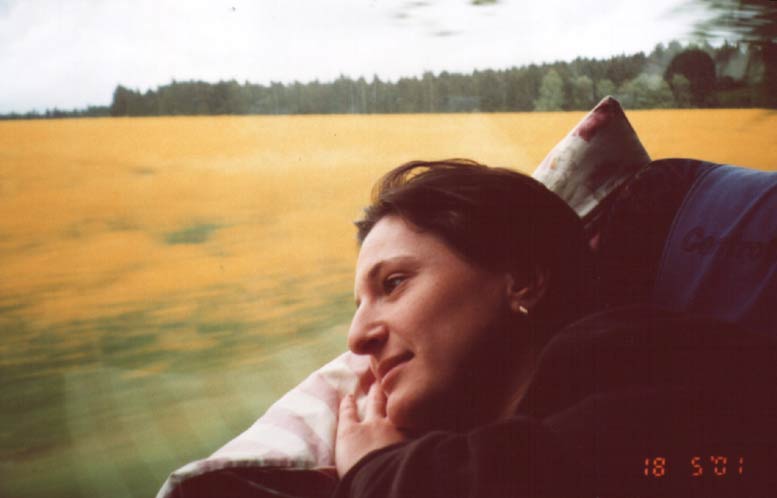
The route from Sarajevo to Prague through Croatia, Slovenia and Austria is someone lengthy. One of the highlights of the 14-hour bus journey was the yellow fields of who-knows-what in the Czech Republic. It seemed to have the effect of getting Branko in a mood to take strange, romantic pictures.
|
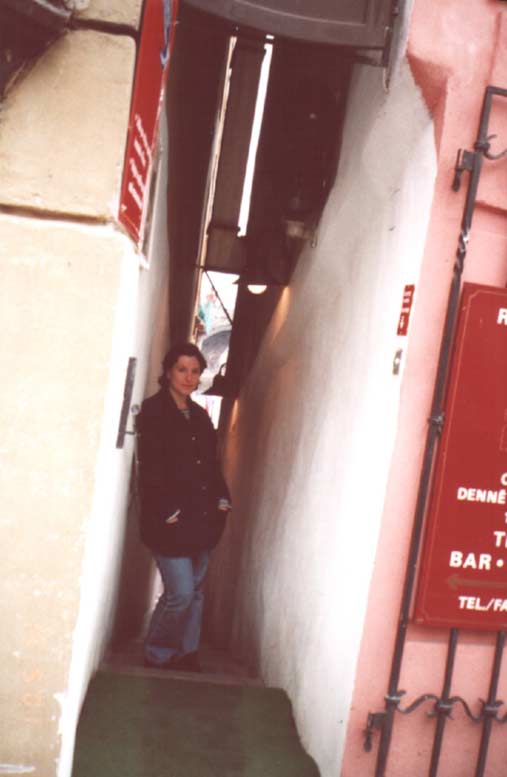
To get down to the bank of the Vltava river is possible but tricky. One of the stairways that will get you there is so narrow that only one person can use it at a time. Notice the button on the right wall - it's a traffic light to tell you if someone is coming up when you want to go down. Needless to say, when it was our turn to go up, someone was 'illegally' coming down. Tanya's comment in Hebrew to the transgressors elicited a response - in Hebrew. You can't get away from Israeli hutzpah no matter where you go... |
||